21 October 2026
Transforming planning
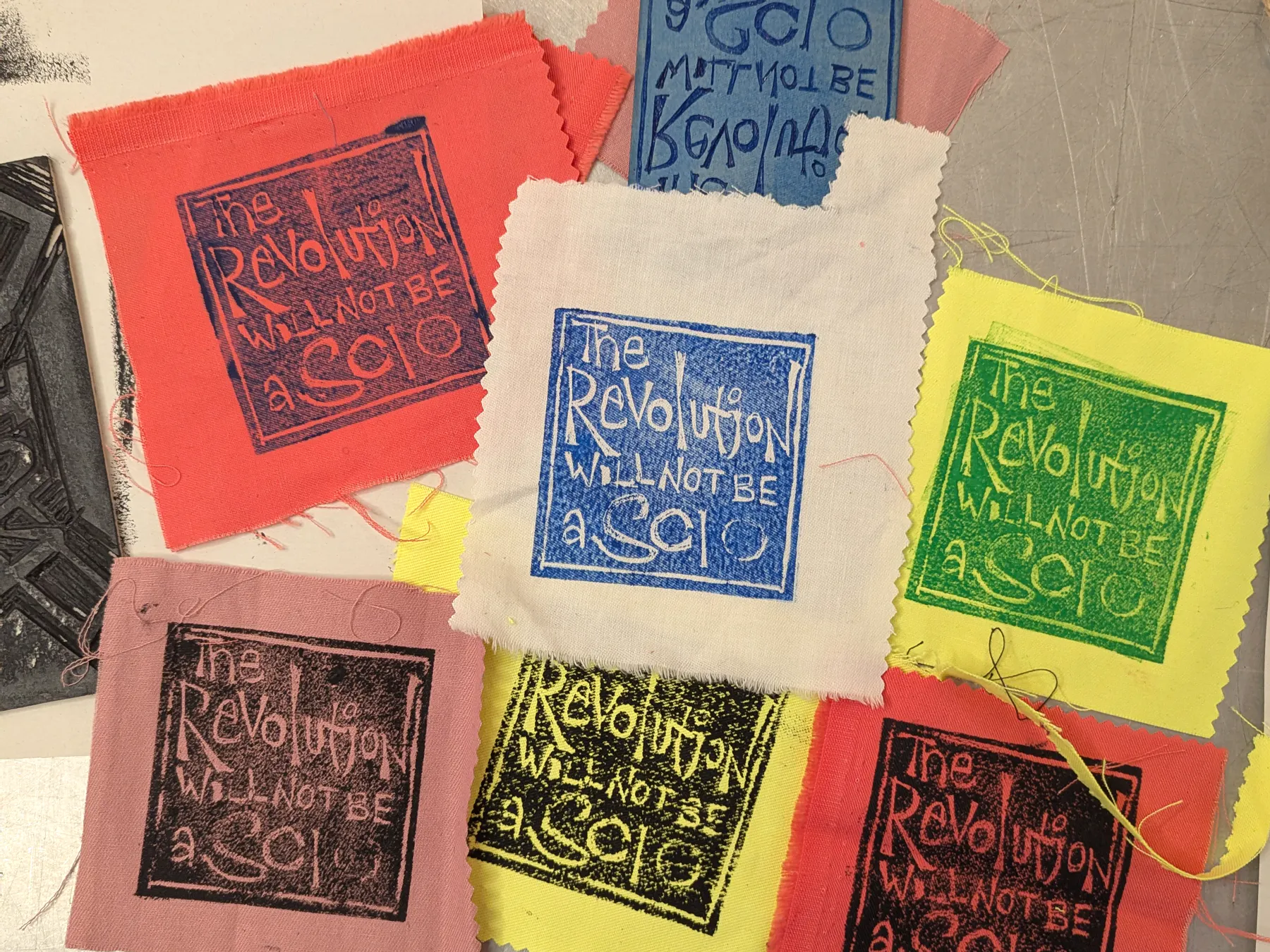
Over the coming years, we’re working with artist Jack Ky Tan to transform planning at Deveron Projects as a sense-making approach for understanding our past and present, and realising alternative futures. This work has been emerging through years of conversation as we have worked with Jack to develop an method and starting point for collaboration. Like much of Jack’s work, in this project, Deveron Projects, the organisation, is the material for the artwork.
In this conversation between Jenny, our Co-Director, and Jack, they share a little more about the context and references for the project starting points, why it’s important to transform planning and how this will begin at Deveron Projects.
Jenny: Last time we met, we spoke about using dramaturgy as process and theatre as method for the project. The focus will be on hospicing. You asked me what we want to rehearse.
Jack: Yes I think that taking a performance approach to understanding organisations is useful because organisations, especially arts and community-centred organisations, are dynamic, improvisational and choreographic systems. They are alive in a way that suits a performance analysis. And by ‘performance’ I don’t mean how an engine or micro-processor performs with efficiency, but how someone or something functions, moves through and thrives in life. The focus around hospicing is because alongside this, we want to explore the idea that planning, as a form of desiring to be something else, requires a dying to the old self. But how do we die in a way that appreciates and honours where we have come from and transition to where we want to go? Perhaps hospicing as a practice can help organisations create a way of planning that is careful and caring.
Jenny: At Deveron Projects (DP) we are consistently planning on a micro, meso and macro level. Planning holds everything together - sort of like the fascia of the organisation and its ecology. I love how artist and scholar Darian Razdar writes of transformative planning and of counterplanning, of feminist approaches within the context of erasure / hostility / risk. Also how architect Indy Johar is writing of modernist organisational structures built to anticipate consequential situations [through planning/ power and responsibility distribution] and how this isn't possible in times of polycrisis. How we currently plan at Deveron Projects feels deeply, deeply embedded within our conditioning as stewards of the organisation. It is the framework for everything.
Jack: Taking Razdar's article as a starting point, I see Planning as an equitable worldbuilding activity comprising three stages:
— Abolition Planning which is starting with radical honesty and acknowledgment about current harmful systems we uphold and determining to leave them behind no matter how ingrained they are in us;
— Accountability or Transformative Planning where all involved parties (harmers, harmed, affected parties, stakeholders, nonhumans) address the root causes of systemic harm together and seek solidarity in planning away the harm; and
— Queer Planning where we imagine and realise different futures without a desire to fixate on certain methodologies or outcomes as if they were canon just because they work for now, and to keep cruising for and realising new utopias, i.e. to keep moving away from the normative.
Jenny: Thanks, yes this is great. I have been reflecting on how our methods for planning don't align with our approach to working in public. That for the most-part the formal ways we have done this with people has been based on essentially traditional consultation models e.g. points of review (consultation) for business plans etc. Also how planning is set within the bounds of continuation, and ideas of sustainability - the super institution (which also makes me think of this text about the total work of the cultural institution by Yazan Khalili).
But planning also happens informally in response to what is happening locally, with people and what's important to our allies and co-conspirators. This feels like the queerest part, and currently the most private / intimate - and that it needs to be so. A feeling of what can emerge.
Jack: I think ‘feeling’ is the key to what we are trying to do in this project. Planning is a way of feeling organisational futures and sensing how that fits with the past and within the flow of the present. Planning is a way to articulate where we want to be, but even as we articulate our plans, we also know that words, numbers, spreadsheets, Gantt charts can never fully capture the sense of direction, the quality of organisational movement or the eventual destination. We will know when we get there. And for now we practice planning as a form of emergence.
Jenny: Yes! And perhaps this is obvious, but inherent in this we need to queer / uncolonise ideas of 'future' - that futuring is modernist in an understanding of time as a linear continuum. I think this is what you are saying re. generational planning. i.e. if we are planning for the future we need to unpick what we understand the future to be and how time moves. I've been thinking about this in relation to the polycrisis and how this represents a fracturing in western embodied understandings of the future / future imaginaries. And what is it to plan for this and within this.
Jack: Queer theorist Jose Esteban Munoz talks about how "Queerness is a structuring and educated mode of desiring that allows us to see and feel beyond the quagmire of the present." If so, planning can become a kind of queer scrying of equitable future universes which we can borrow from to manifest now. But what is always interesting to me is how this framework can be translated into working administrative tools and protocols on the ground for an organisation. That’s what I hope we will do together at Deveron Projects in the next couple of years.