Jonga: Look at Me - Museum of Women, Dolls and Memories
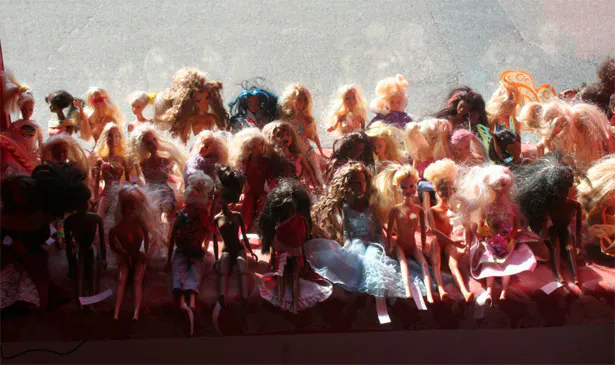
Senzeni Marasela came to Huntly from Johannesburg, South Africa with her daughter in 2009.
In Huntly, like anywhere else in the world, many women struggle with their self-image. The silver screen of our globalised culture presents a singular image of female identity, ignoring personal and cultural histories. Petite and pale-skinned, this image is characterised by the Barbie doll. So, with the 50th anniversary of the doll, what is it that affords Barbie the affection and admiration she receives? What is it that provokes an opposing reaction? And what is Barbie’s role in the worldwide community of women, as an icon, a look, a childhood memory and a woman?
Senzeni cites her own experience as a woman, and relationships with other women, as a stimulus for her artwork. Her mother is a key figure for understanding Senzeni’s views on female identity- her schizophrenia diagnosis is exemplary of a woman fragmented by contradictory expectations and multiple roles. Senzeni has developed a practice of working with dolls, wherein parallel destructive and nurturing relationships are explored to understand the complex role of the mother.
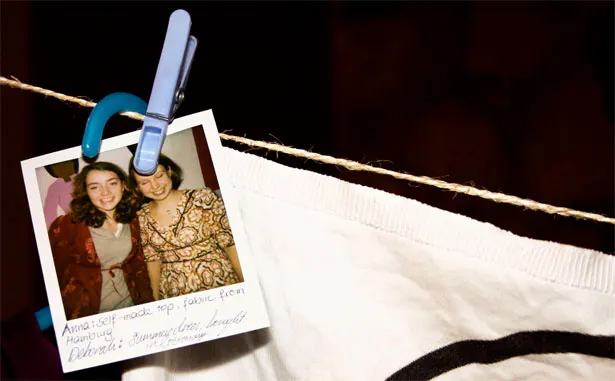
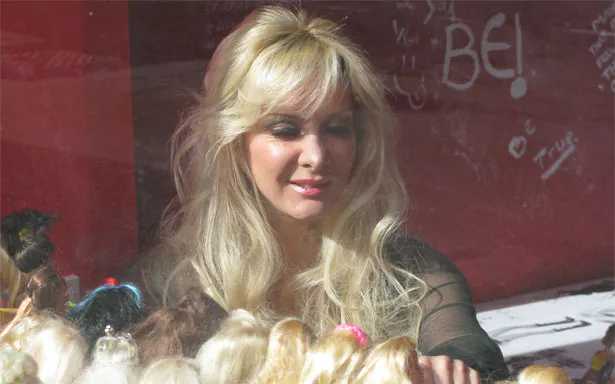
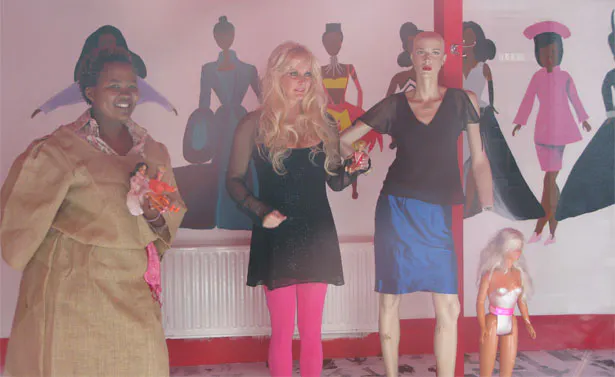
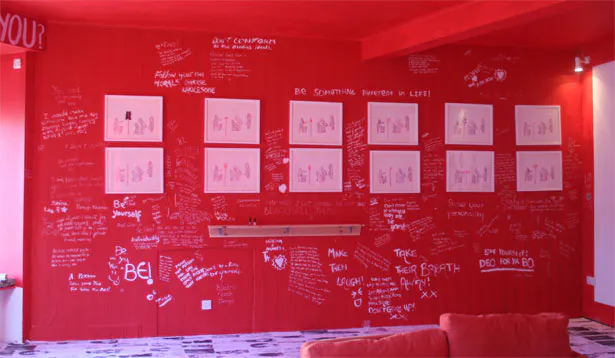
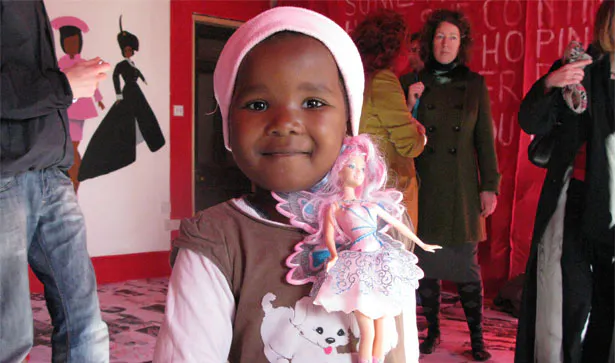
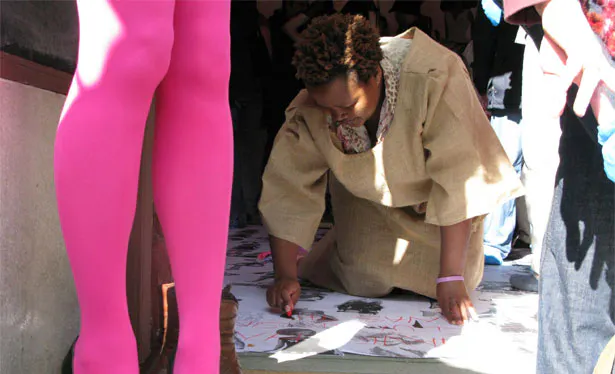
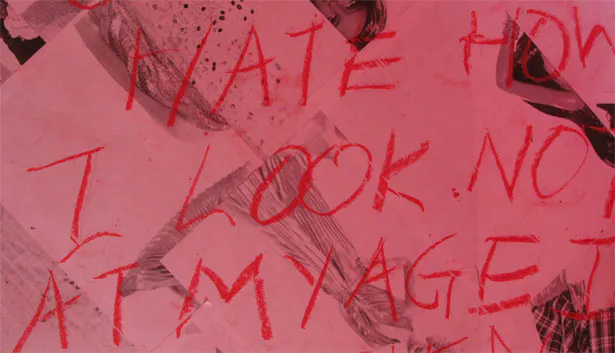
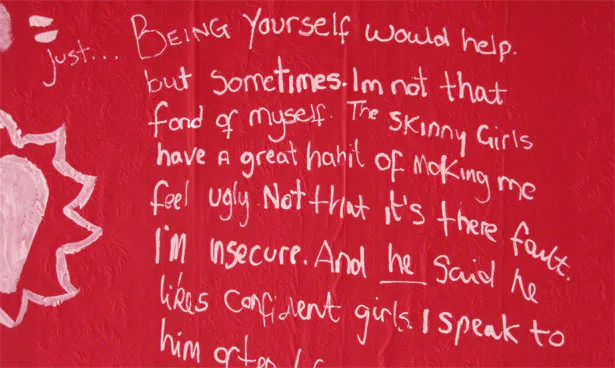
The empty shop on Bogie Street became a Museum of Women, Dolls and Memories, for which Senzeni organised a town-wide Barbie amnesty. The museum exhibited the dolls as they were received (many of them naked) alongside the voices of real women from Huntly. These were presented in an oppressively pink room, the walls of which had been scrawled upon by Senzeni with statements and questions gathered from the community. Throughout the installation of work, she chalked her phrases wearing a shapeless sackcloth, renouncing presentation and fashion identity. At the same time, she remained highly visible in contrast to the surrounding white-skinned women and ‘real life Barbie’ Sarah Burge, with whom she posed for various photographs. It is this grey area that Senzeni seeks to explore: the intersection between the fragments that contextualize women’s lives.