The Walking Institute
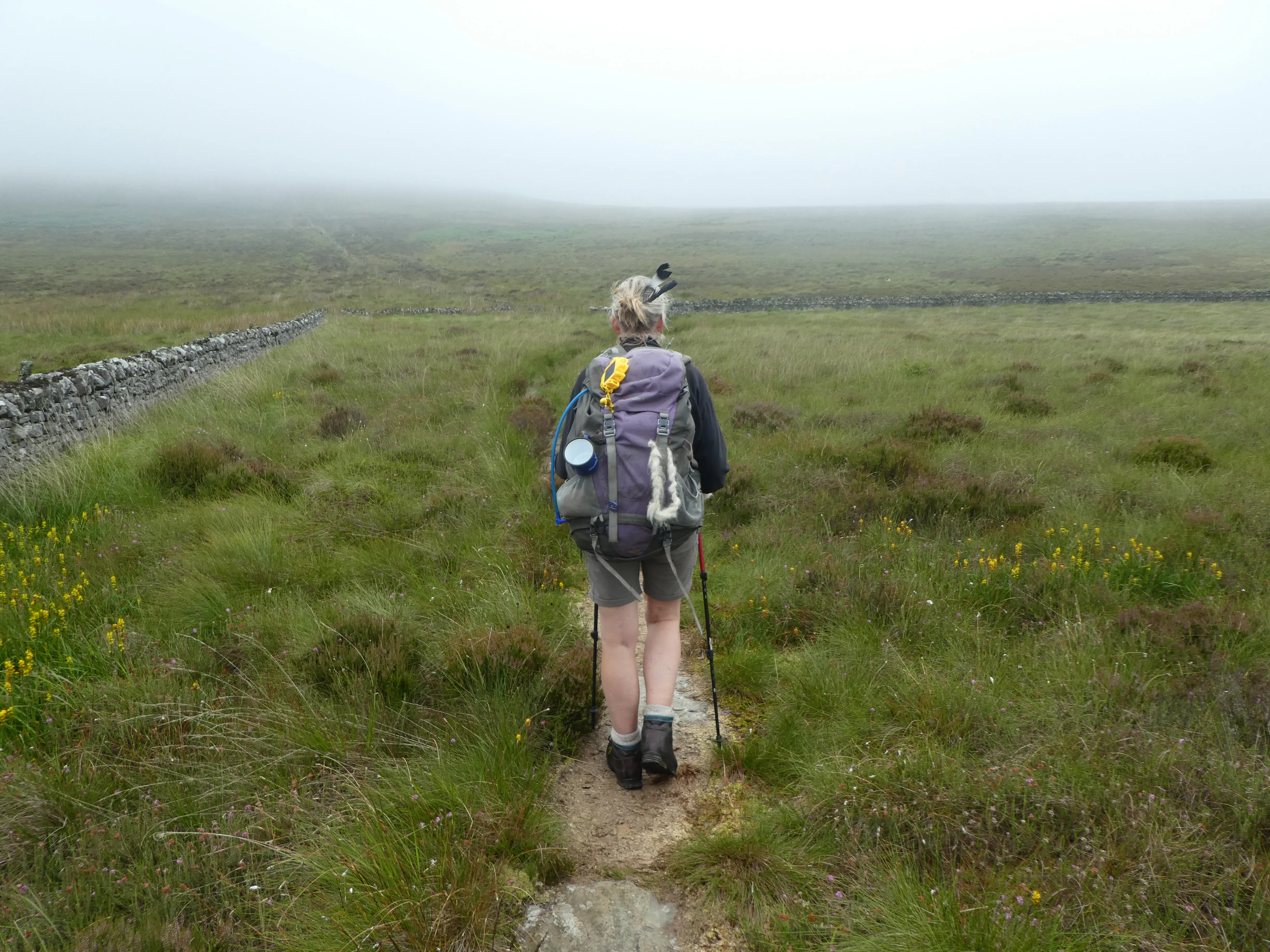
The Walking Institute explored, researched and celebrated the human pace. It did this by bringing walking activities together with arts and other cultural disciplines and people from all walks of life.
This peripatetic school brought together:
- Research & Mapping
Mapping and exploring artistic and academic walking discourses, the relationships and convergences between historical and political forms, and the development of the walking leisure industry, as well as its role in the environmental discourse. This research was held on Deveron Projects' old website, and within a physical library in Huntly that holds a collection of books, articles and references relating to walking & art. This is now part of the socially-engaged art library. The Walking Institute organised regular talks, symposiums, annual conferences and other research driven events. - Activities & Path Making
Bringing together artists with others through all forms of walking practices, including a year-round programme of actions that touch on political and ethical issues, seasonal approaches, path-making initiatives, community and place-making activities. This contained community events, short and long-distance walks, walking research residencies and commissions with the purpose of addressing themes related to tourism and economic development, health and social cohesion and environment and ecology through active walking initiatives. This took place in and around Huntly, but radiating out to wider Scotland with a view of becoming a programme with international dimensions.
These key aims were addressed through questions that explored: health & social cohesion, environment & ecology and tourism & economic regeneration in Huntly and further afield through art and related disciplines, such as geography, anthropology, cooking, architecture or history:
- Health & Social Cohesion
Heart disease, obesity and mental health are some of the main concerns and focus for health organisations. Walking has been identified as a successful activity for both preventing and addressing such illnesses. The Walking Institute aimed to complement traditional health institutions’ approach through more creative initiatives by getting people walking to improve both their physical and mental wellbeing. Walking should be enjoyable, people should be empowered, socially active and motivated to be mobile outside as well as mentally fit and nourished on the inside. As an independent programme that sits outside the medical approach, the Walking Institute aimed to spark a desire to become fitter by offering a more complex understanding of people’s own physicality and health. - Environment & Ecology
The Walking Institute investigated how we can appreciate and understand environment and place in different ways through both thought and action and how we respond to the landscape and expand our understandings care of its ecology. The project engaged in the discussion around environment and ecology through active engagement in walking. It did this by working with artists and other specialists like ecologists, botanists, foresters, community planners, who explore both rural and urban contexts and the appreciation of our environments. The programme focused on how various creations; both ephemeral and of a more solid nature, can explore site, community and participatory action specific to place and its people. - Tourism & Economic Regeneration
The Walking Institute asked how artist-led walking projects can contribute to tourism and wider economic development locally in Huntly and the North East of Scotland, and how these experiences could be transferred to other places. The key market groups that were targeted by the project include: local people, looking at their place afresh; tourists to the region; those interested in outdoor and/or cultural tourism; and the growing walking artist network and related disciplines from academia. - Politics & Ethics
For centuries people have employed walking actions as a form of collective protest or political action. From the Suffragette walks, to the more recent, Hamish Fulton's Slowalk (2011, in support of Ai Weiwei); walking can be a peaceful and powerful form of expression.
The Walking Institute related to larger questions that extend to international perspectives including debate around the right to walk, crossing political and physical boundaries, cultural relationships to walking, including the fear of walking and geographical restrictions. It also highlighted dialogues around themes of access that effect both artists and communities across the globe. Such as in 2011, when Deveron Projects organised the UK Border Walk, a 77 km walk and discussion about the detrimental effects of the new points based visa regulations for overseas artists. - Community & Place
The Walking Institute built on The Town is the Venue methods through a programme that encompassed the diversity and ecology of place, its inhabitants and cultural heritage. This was done by responding to both community (people, histories, food, language, storytelling, ethnic diversity, politics) and physical context (place and landscapes, architecture, geographical and topographical features). Projects worked with the existing strengths within the localities, whilst exploring themes that address directly the needs and interests of the communities and their places. - Season & Time
Since early times, people have responded to seasonal changes and calendars through making artefacts and celebrations. The Walking Institute used the four seasons, weather systems and the cultural calendar to establish a timeline for projects and to curate events around seasonal changes. This aimed to celebrate the uniqueness of each season and what it can offer as a reference point for artists to respond to.