14 May 2025
News from the gardens: May
Deveron Projects has cared for the Brander Community Garden for over 15 years. During this time it has been developed through lots of projects, including A Bite on the Side with Norma D Hunter giving the garden lovely apple trees, Flax Turns with Christine Borland creating distinctive wedge-shaped beds in the lower garden for growing flax, The Town is the Garden creating compost bays and raised beds, a greenhouse and shed. Most recently, the Caretakers' Garden has explored the networks of care within the garden, human and more-than-human. Led by Lindy Young, we offered workshops and events focused on biodiverse gardening and created a no-dig bed, a perennial wild meadow and food forest. Celebrating this project, we are about to launch a Garden Care Plan, written by Lindy. This blog by Lindy gives an insight into this publication, and what's happening in the garden too!
You can visit the Brander Community Garden behind the library at any time. It is accessed via a white metal gate at the top of McVeagh Street. If you would like to get involved, pop by on a Tuesday to meet Lindy and get stuck in.
May — “Let Them Eat Hostas?”
I had an interesting dinner last night. Not Hostas, but a selection of fresh weed leaves from the Brander Garden, sautéed with onion and added to my pasta. It tasted very green and healthy and not at all bad.
This meal was inspired by my watching a documentary last month, Hack Your Health-The Secrets of Your Gut (Netflix).This film concluded that we should all be aiming for between 20 and 30 different plants in our diet per week in order to keep our microbiomes in good health. I wondered how much it would cost at the supermarket to buy so many different fruit and veg and decided that there had to be another way.
After a lovely, sunny April, the seedlings in the greenhouse are doing great. If there are no setbacks we should eventually have Runner Beans, Squash, Tomatoes, Cucumber, Pumpkin, Turnip and salad leaves as well as all the other things we will direct sow, such as Beetroot and Carrot. Apart from the salad leaves though we will have to wait quite a long time for everything else to grow. What can we eat from the garden during this traditional ‘Hungry Gap’? We have a few Purple Sprouting Broccoli florets left, some Chard and there will be lots of Rhubarb very soon. Only 27 more plants to find!
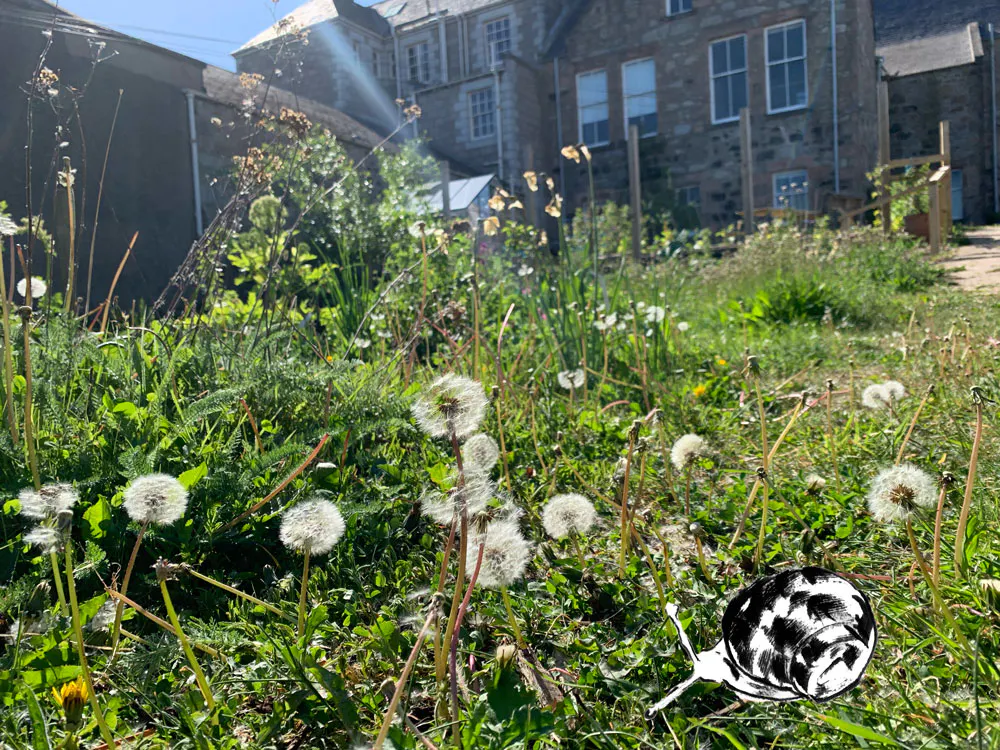
What we do have loads of is weeds. Because we are trying to create a space that has biodiversity and is kind to wildlife, we probably have more weeds than most gardens. The meadow is designed to be full of wild, native plants. At the moment it is being dominated by Dandelions. As is the lawn, which we are trying not to cut too short in order to preserve insect life. A meadow may look like the ideal type of garden for lazy gardeners who just want to let their gardens grow wild. If there is to be real biodiversity though it will take a bit of work. A lot of the Dandelions will have to be removed and replaced with other wild plants, such as Red Campion, Meadow Sweet and Mallow.
While I spent a long day yesterday, pulling out Dandelions (Taraxacum officinale), I kept the youngest leaves aside, particularly any that had been deprived of light, as they are less bitter. I added the freshest of the Ground Elder (Aegopodium podagraria) that is poking up through the pebble mulch I put down in an attempt to thwart its growth. Lady’s Mantle (Alchemilla mollis) also went in the mix and some young ‘Sticky Willy’ (Galium Aparine). I also added broad leaved Willow Herb (Epilobium montanum), Wild Garlic (Allium ursinum) and Three Cornered Garlic (Allium triquetrum). These leaves got soaked in salty water for a day to remove bitterness, apart from the Alliums which were added to the pan late on in the cooking stage to retain their flavour.
It can feel a bit daunting, with so many of our common weeds being edible and very nutrient rich, to know what to pick and what to do with them. I am not much of a cook. My dinner tasted fine, but, in more skilled hands could have been really tasty I think. In order to know what to pick I relied on a couple of books, ‘The Thrifty Forager’ by Alys Fowler, ‘The Weeders Digest’ by Gail Harland and ‘Edible Wild Plants and Herbs’ by Pamela Micheal. The RHS April Magazine had an interesting article on Edimentals (plants that are both edible and ornamental) by Stephen Barstow. Among the many flowering edibles he recommends, Hosta are a favourite. Now would be the time to enjoy the emerging fronds before the leaves open. I am not convinced however. A lot of edible flowers, such as Borage, Day Lily and Nasturtium are very plentiful and tasty but I’m not sure I would ever have enough Hostas in the garden to feel able to sacrifice them to the dinner table. I do like his idea however of the garden being full of ornamental plants that are also edible, where you can forage for your dinner and also enjoy a beautiful flower filled space, full of insect and bird life. It chimes with what we are trying to do in the Brander and spurs me on to want to fill the space with a tasty variety of plants that anyone visiting can forage from.
Our little library in Square Deal has a good selection of gardening and recipe books, including a couple of those mentioned above if you would like to come along and do some foraging and need more information just get in touch with the team.
If we have any excess plants available throughout the season they will be on the Barter Cart. This is now in the Brander Garden due to lack of pavement space at Square Deal just now. The gate is always open and all are welcome. We are also very happy for anyone to come along and volunteer if they have a bit of spare time. Come and see me, Lindy, in the Brander Garden on a Tuesday if you would like to volunteer, or speak to any member of the team to arrange a time that suits.